
Farmland has always been one of the most durable assets in Ghana. With food demand rising and agriculture still driving many economies, buying farmland can bring you a steady stream of income and real long-term value. And the good news is, there are plenty of farmlands for sale in the country.
But before you invest in agricultural land in Ghana, there are key things you need to think about.
In this post, we’ve put together a full farmland buying guide that discusses everything you need to know before entering the agricultural sector, such as:
- Location of land
- Soil quality and fertility
- Water availability
- Land ownership and documentation
- Size and expansion potential
- Type of farming you want
- Infrastructure and access roads
- Security
- Cost and financing
- Government policies and support
- Climate risk and resilience
- Labour availability and management
- Market access and value chains
- Environmental compliance and sustainability
- Mechanisation and equipment services
- Insurance and risk management
- Partnerships and exit strategy
- Red flags
- Quick checklist
- Conclusion
Must-Know Farmland Buying Guide
Location of Land
The first consideration we’ll look at is the proximity of the land to major centres. How close is it to a market, town, or transport routes? The closer it is, the more it saves you money and time. Nearness also increases land value. Check the topography for slopes, lowlands, and flood plains, which typically affect what you can grow and dictate how you farm.
Also, observe neighbourhood activity: a piece of land in a village with active farms has a lower chance of getting encroached upon and gives you more options when it comes to labour. To access the land, you should visit the site at different times; it can be on a weekday, the weekend, during the rainy season, or when you deem fit. Record the travel time to the nearest town and market.
Land prices in such areas may be higher compared to cheaper land in remote areas. Yet, these distant options may be rather hard to access when you have to transport your produce to town. If, however, the land is nearer to processing centres, that can reduce your costs considerably.
Soil Quality, Fertility
Secondly, not all land is good for all crops. And different types of soil may be more suitable for certain crops than others. However, if the land is not suitable for crops at all, you may have to invest more in it than you planned.
Before you proceed with your commitment, it’s essential to test the soil with the assistance of an agricultural extension officer. Ask for soil pH, organic matter, nitrogen, phosphorus, potassium, and texture tests. You should get samples from several spots in the field and at different depths. One test is not enough if the land is sizable.
Also, talk to local farmers about the productivity of the land: yields and inputs they use. This will save you time other than trying to figure it all out on your own. Fertile land reduces the need for heavy inputs. And, it greatly benefits to be clear on these issues from the outset.
Now, if you need to, you can plan soil improvement: cover crops, compost, lime, organic matter, and crop rotation. An agronomist can help you develop a simple farm plan informed by the soil test.
Water Availability
Availability of water will tell greatly on the success of your farm. In your search for arable land, be on the lookout for rivers, streams, boreholes, or irrigation systems that are close. Some rivers dry up in the dry season, and since relying on the rains alone for farming is risky, you may want to measure seasonal variation. You wouldn’t want to subject the success of your enterprise to rainfall only, which is currently erratic and unpredictable.
Also, cross-check water rights and legal access. In certain places, you may need permits or community agreements to use some water sources. Then again, you should explore water storage systems such as tanks, ponds, or small dams to give you flexibility during the dry season.
And if you’re thinking of a borehole, find out the depth to groundwater. Ask neighbours how boreholes fare in the area; they will let you know what causes them to fail and why.
Land Ownership, Documentation
Before parting with your hard-earned cash for any parcel of land, verify the title, lease, or customary paperwork. Check for any hindrances, caveats, court cases, or overlapping claims, because you need a clean chain of title.
When it comes to land ownership in Ghana, it’s not uncommon for buyers to get embroiled in family land disputes. Hence, you need to confirm who the seller is and if they’re authorised to sell. Working with the Lands Commission and licensed property agents can make this easier if you don’t have the time.
You must also get a verified site or survey plan and confirm the boundaries on the ground; clear markers, as well as neighbours’ agreement, prevent any kind of confusion. For the stools and family land, get proper permissions in writing. And in the process, confirm the roles of all who matter: chiefs, family heads, and local assembly.
Do put together a checklist of documents to ask for before you visit: title, site plan, receipts, seller ID, and any written agreements.
Size and Expansion Potential
First, determine what your goals are before you go looking for land. Small plots are good for market gardens or specialised (high-value) crops, whereas larger plots give room for expansion and mechanised farming.
What if your neighbour decides to sell later on? What about the consolidation of parcels? Continuity is valuable. That’s why you should think through what you want to do in the long term before making your choice.
Also, think in units. Farms don’t come without storage, staff housing, roads, and buffers for future expansion. Make room for such. Further, it’ll help to plan the field layout with headlands for machinery, access roads, and drainage channels before you buy. Considering these issues early on can give you a clearer sense of what success and the future would look like.
Type of Farming You Want
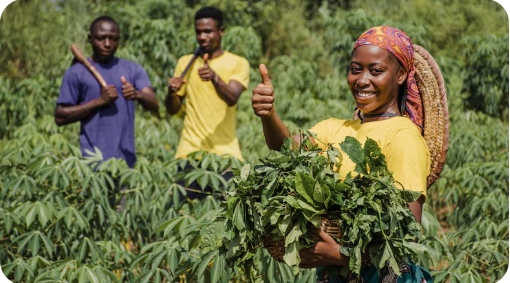
Now, decide the type of farming you want to do. Are you interested in crop farming? Crops like maize, cassava, vegetables, or tree crops need different land features from other forms of farming, like aquaculture.
You’d have to match the land to the production system. When it comes to crop farming, high-value crops like vegetables and herbs require more labour and reliable water. Tree crops, on the other hand, demand long-term planning and patience.
Or would you rather go into animal farming like poultry, cattle, piggery, or goats? You need a lot of grazing area and water for livestock, as well as ensuring disease control. There’s also the possibility of aquaculture, where you can do fish farming if only quality and reliable water flow are readily available. Each option requires different land features.
It’s advisable to decide what type of farming you want to get into before even going in search of suitable land. You can do this in a one-page business plan and run a test of your choice against the plan.
Infrastructure and Access Roads
When you’re searching for land, critically consider the roads. While good farm-to-market roads cut transport costs and post-harvest losses, internal roads on the farm also speed up work and protect crops. Unfortunately, poor roads are currently a disadvantage in the farming sector.
It will be beneficial, also, to have electricity near your farm site as it will support processing, cold storage and pumps. And in the case where the area is not grid-connected, you’d have to factor in solar and generator costs. A good reason for having your farm site in or near town is the ease of access to processing centres, cold rooms, and aggregation centres.
These facilities really reduce loss and increase your farm gate prices. So, help yourself by mapping out the routes your produce will travel to the buyer, and then calculate the farmgate price.
Security
You know that remote farmland can attract encroachers, illegal logging, or theft. Thus, you may need to invest in fencing, locks or engage caretakers to secure it. A plan for security before production starts will do. Build good community relations; farmers around you who know and benefit from you will decrease your risk.
Physical and human security both cost money, so you should add them to your budgets. One thing, though, you must meet community leaders, let them in on your plans, and discuss boundaries to reduce disputes. Get all agreements in writing.
Cost and Financing
The upfront cost of land is only the beginning. Be prepared for clearing, fencing, soil preparation, seeds, seedlings, fertiliser, labour, irrigation, equipment hire, and other farming inputs and resources. Make room for contingency and miscellaneous expenses.
Farming is cyclical, so prepare a seasonal cash-flow plan. First, expenses and later revenue. Be clear on how you will close this gap. But you can explore financing options, like agricultural loans, savings groups, input credit schemes, or off-taker advance payments. Understand each of their terms and interests. Don’t be quick to sign anything before you get a real break-even calculation for the first two years. After all these, be patient and realistic about how long it will take to see returns.
Doing your own initial research on the type of farming you want to get into is a must. It’ll help you to lay out some of these issues clearly before setting out. You will uncover existing challenges, threats and opportunities and available resources to guide your way out and make the most of your investments.
Government Policies, Support
Different aspects of farming qualify for government support through the local assemblies. Such initiatives affect inputs, subsidies, extension, and market access. These incentives can reduce some of your costs. So, check what is active now. They can be a big help for your farming business.
Take note of compliance. You may require permits for irrigation, water use, or certain livestock activities. Factor these in. Some crops, moreover, get priority support. There may be incentives for mechanisation, storage, or processing.
You should visit the district agricultural office to update yourself on active programmes, extension visits, and recent initiatives.
Climate Risk and Resilience
Rainfall patterns are shifting. And over the years, this has become a concern for farmers. As an entrant, check historical weather records and local experience with droughts or floods. Based on your findings, plan for resilience. These can be in the form of harvesting, mulching, shade nets, and soil conservation.
Do avoid flood-prone pockets and steep erosion-prone slopes, unless you’re planning on a major investment in control measures. And, you should consider insurance options where possible, at least for high-yield crops.
Labour Availability, Management
It can be a real struggle in some areas to find workers at harvest time. That’s why you need to assess local labour supply and seasonal labour needs. Decide whether you will use family labour or seasonal workers, or contract services for key tasks.
Whichever you opt for has its cost and management implications. However, it usually helps to build relationships with local youth groups, who are often the most reliable seasonal workforce you’ll get.
You must plan for worker housing, sanitation, and fair wages. This will help you reduce turnover and boost productivity.
Market Access, Value Chains
Who will buy your produce? In your planning, look for reliable off-takers, processors, markets, or export opportunities. Do this because price volatility is real. Secure at least one buyer or sales channel before you begin planting full-scale.
You should think about value addition: drying, milling, packing, or basic processing. These actions lengthen the shelf-life and lift prices. Also, consider joining a cooperative. Together with aggregators, they help reduce the marketing burden and improve bargaining power.
Environmental Compliance, Sustainability
Be a good farmer. Follow good practices for fertiliser and pesticide use to help you avoid water contamination and soil degradation. Plant trees, hedgerows, and buffer strips to protect soil and increase long-term productivity. Such sustainable practices will win you long-term buyers and sometimes fetch premium prices. You must, however, record inputs and practices. The ability to trace your progress is a growing market requirement.
Mechanisation and Equipment Services
It’s expensive to own equipment. No doubt. Look out for local sources where you can hire tractors, ploughs, harvesters, and sprayers. Getting these smaller machines and service providers can reduce start-up capital and help you scale. You must budget for equipment hire in the first two seasons and build reserves for future purchases. You have to, however, plan maintenance and fuel supply for any machine you use.
Insurance and Risk Management
Farming can be high-risk. Help yourself by spreading this risk: mix short- and long-term crops or combine crops with livestock. Learn more about crop or weather-index insurance where available. Though it won’t cover everything, it will, at least, reduce catastrophic loss.
Make conscious efforts to build emergency savings or contingency funds that can help you with pests, diseases, or market shocks. Document everything with photos and receipts. In cases of disputes and claims, clear records will bail you out.
Partnerships and Exit Strategy
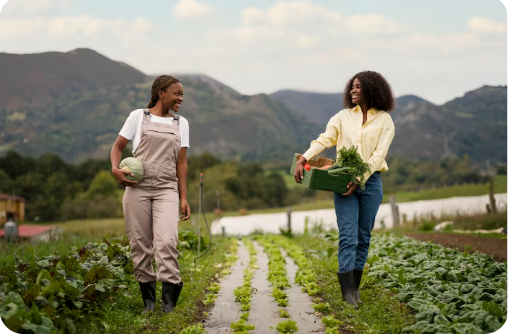
Depending on the type of farming you want to do, consider joint ventures with experienced farmers, off-takers, or investors to share cost and risk. You also have the option of leases and contract farming, which will let you operate without full capital involvement. Check how these arrangements work and how they can help you achieve your goals. Do, however, check the lease lengths and exit terms.
But then, get your whole picture together and define your exit strategy after all your operations. Will you sell the land, lease it out, hand it down to a successor, or convert it for another use, say agro-processing? Put this clearly into writing. You may, however, want to avoid long informal deals without legal backing. You will save yourself a ton of trouble if you do this.
Red Flags to watch for in Farming
- Missing or unclear documents
- Unresolved boundary disputes or court cases
- Signs of frequent flooding or severe erosion
- No water source and very high cost to access water
- Areas with no farm labour and no farming community close by
Quick Checklist before Buying Farm Land
- Visit the land at least twice (including in the rainy season).
- Get a full soil test and water availability check.
- Verify title, survey plan, and ask for proof of tax or rates payment.
- Map routes to market and measure travel times.
- Speak with neighbours about crop history and local issues.
- Draft a two-year budget and cash-flow plan.
- Confirm labour availability and living arrangements.
- Inspect for pests, disease history, and previous land use.
- Check any planned infrastructure projects nearby (roads or irrigation).
- List red flags (overlapping claims, visible erosion, no water, no access road, etc.).
Conclusion
Investing in farmland can bring long-term wealth. It’s a practical investment, no doubt. But it’s not a quick-profit venture. Location, water, soil quality, and legal documentation all matter. Take your time, do the checks here, and plan carefully. Let your goal keep you going, even in the face of setbacks.
Done right, investing in agricultural or farmland is one of the most rewarding investments you can make in Ghana.